It’s been a while since I featured a specific culture so after coming across a few books that pointed to the same one, I thought I’d put together some activities to highlight Bosnian music.
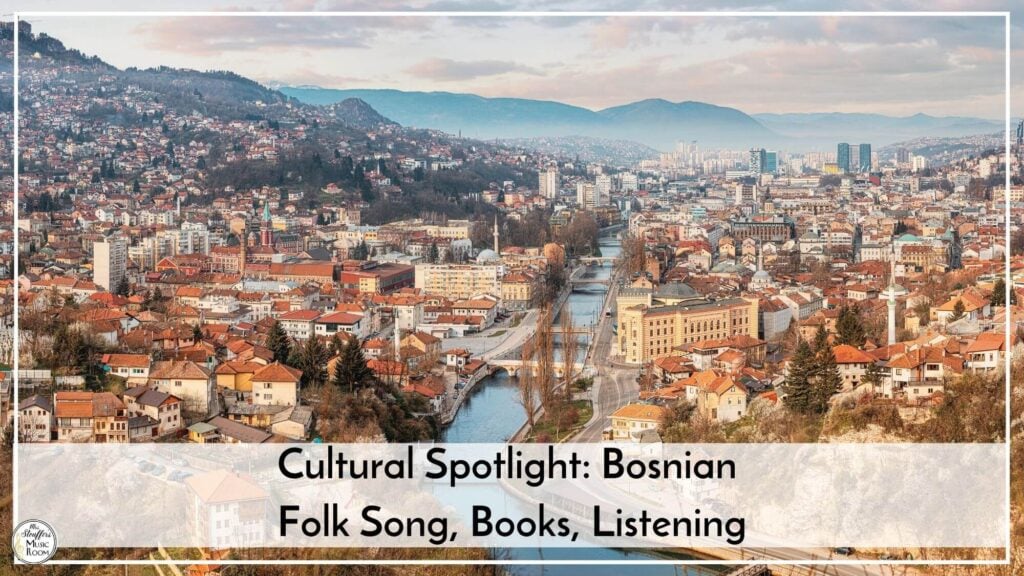
I have no cultural ties to Bosnian heritage that I am aware of. I am sharing some ideas for use in the elementary music classroom. Cultural inclusion should happen throughout the year and not only during heritage or history months. I do have Balkan and Eastern European heritage and participated in cultural activities as a child. I grew up doing kolo dances and can pronounce Croatian language words but cannot understand 99% of what I am saying.
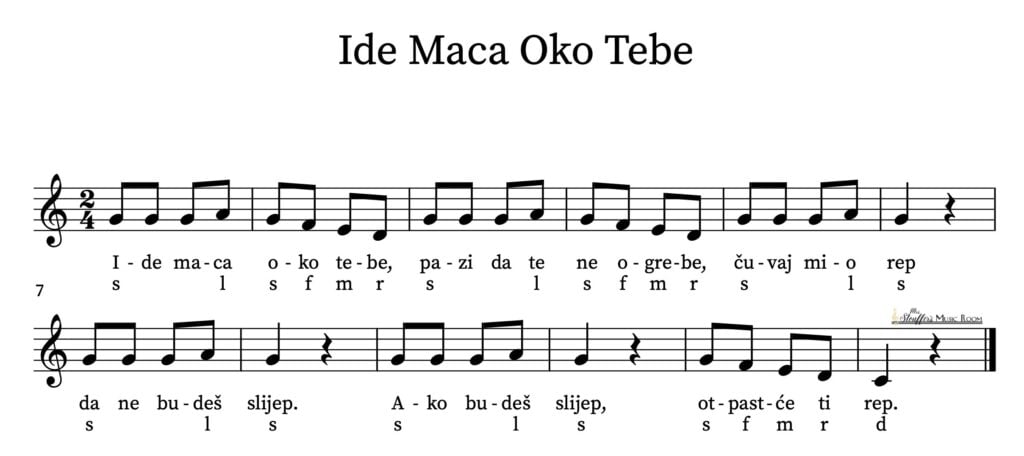
Rhythm Set: rest, ti-ti, ta
Tone Set: drmfsl
Lyrics
Ide maca oko tebe
Pazi da te no ogrebe
Čuvaj mio rep
Da ne budeš slijep
Ako budeš slijep
Otpast će ti rep.
Translation:
A kitty goes around you,
Watch out, it might scratch you.
Guard your precious tail,
Lest you become blind;
If you become blind,
Your tail will fall off.
Formation: Seated circle with one student (the cat) on the outside.
Game: The cat walks around the circle with an object in their hands such as a scarf to represent the cat’s tail. The cat drops it behind someone’s back as they walk. When the song ends (or a child notices the object behind them), the children feel for the scarf behind them. (It may be good to have students close their eyes during the singing). The child who has the scarf becomes the mouse. They must jump up and run around the circle back to their spot before the cat can steal their seat.
This is a chase game popular in the Balkans. This would be a great pair with Naughty Kitty Cat as there are some similarities as well as the same target concept for rhythm, and, if isolated, melody as well (la). We know that Naughty Kitty Cat derived from a Hungarian song, but given that this is popular in the Balkans which is not too geographically distant, I wonder if there is a connection adapted for language considerations.
YouTube Video:
These are two books which are obviously about the same thing. However, one is more fictionalized, a bit more colorful, and a better option for younger students.
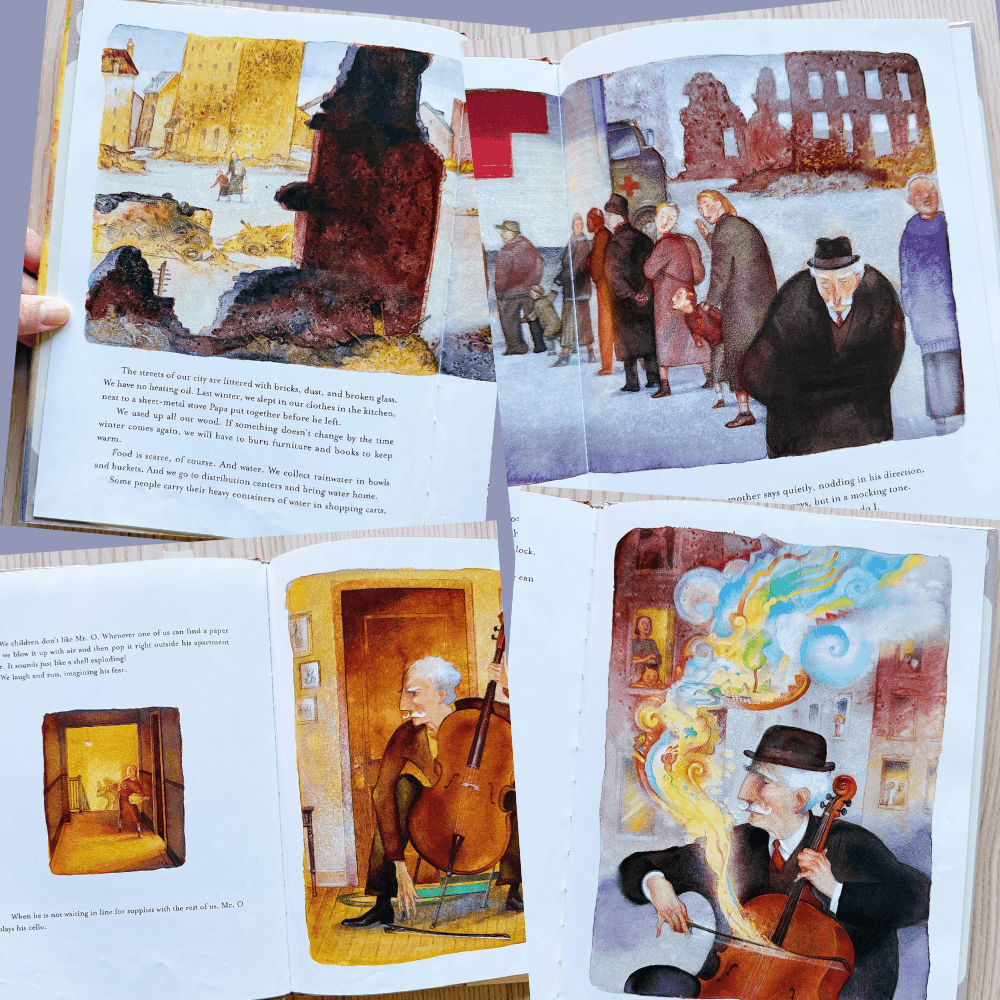
Author: Jane Cutler
Illustrator: Greg Couch
ISBN: 978-0525461197
Buy the book
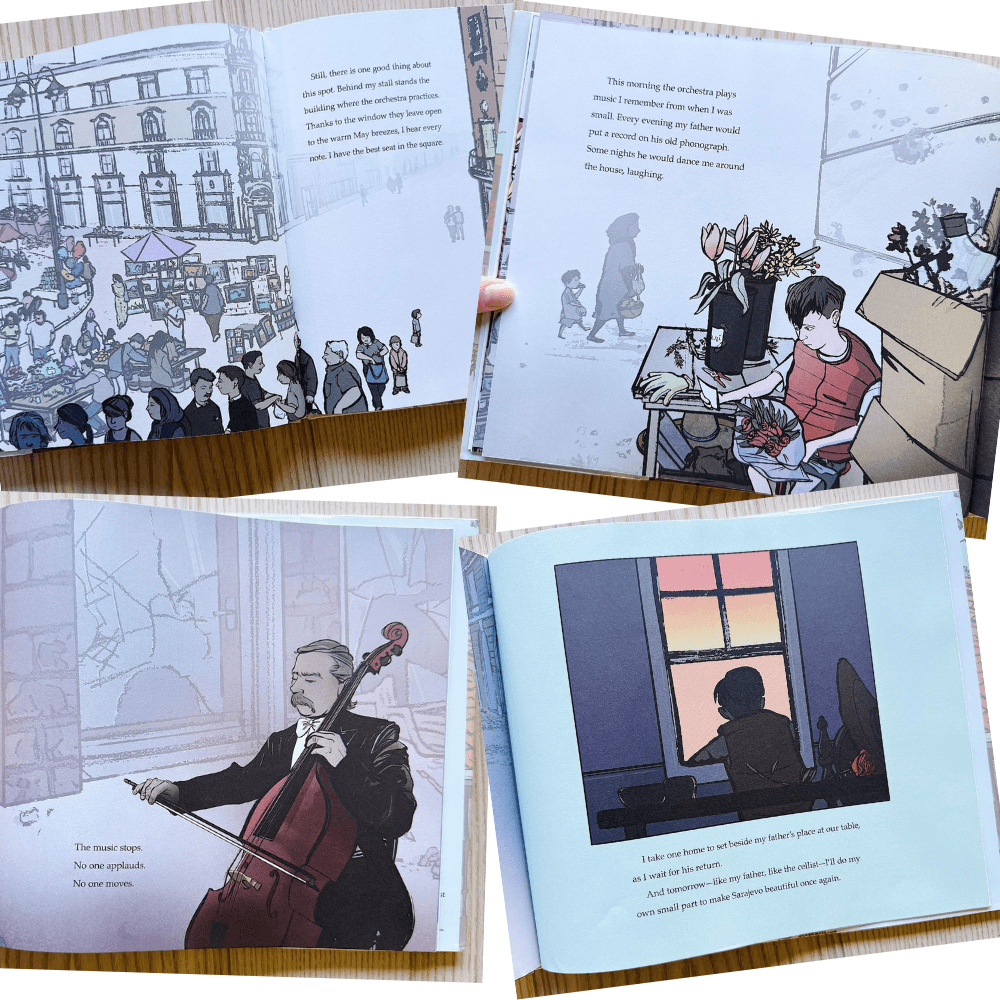
Author: John McCutcheon
Illustrator: Kristy Caldwell
ISBN: 978-1561459438
Buy the book
The Cellist of Sarajevo, Op 12 by Yo-Yo Ma
https://www.youtube.com/watch?v=TgFBdvZ–24
Sevdalinka, traditional urban folk song
https://www.youtube.com/watch?v=aLjIWvE4Cxc
I hope this has given you some great ideas on incorporating Bosnian culture in your classroom!