

Lesson planning can be tough, and learning to write them takes time, getting to know your students, and getting a feel for how long things take. Let’s take a look at some of the ways we can make lesson planning a little easier!

1. Pacing is important!
I actually think this is a classroom management skill. If your pacing is off, it can lead to a breakdown in behavior management. Kids don’t have long attention spans (and tbh, neither do I), but a section of your lesson should be no more than 5-7 minutes. This is true now more than ever as more and more students have screens.
A few things about this:
– If you move to a different activity, you can still USE the same song (EX: play the game, then move to a reading activity with it)
– Move between high focus and low focus activities (EX: Reading notes, movement, practicing writing on the staff, listen to a story).
– Be realistic about how long things will take.
– My broken rule: If students are playing a game and really engaged, AND I don’t need them to move quickly, I may linger longer than 5-7 minutes.
– Include checks for understanding throughout your lesson. They can be simple such as show a thumbs up if you understand or thumbs down if you want more explanation, or more concrete like an exit ticket.
– Test how long things take you (especially if you have reading a book in your lesson plans)
2. Start small
If you are new, it can be overwhelming. Instead, really worry about perfecting 1 or 2 grade levels (think K or K-1). Of course you’ll plan well for your other grades, but if you get one grade really set, you’ll be able to use those plans next year and start the following year on the next grade.
3. Plan a month or six weeks at a time.
We talked about curriculum maps and why they are important and this is where they can really help you. Take one month and plan all the way through. This will help you think a little more long term, and you’ll be able to work for the goals you’ve got set. If you need to rotate doing one grade at a time, that’s helpful so you can stay in the mindset for that one grade. If you plan 6 weeks out, you can rotate and worry about 1 grade a week.
4. If you have multi-age classrooms, rotate concepts by year.
I’ve been in this one before, but the way that worked for me is to focus on either rhythm or solfege for the whole year.
If you have 1-2 in the same class, year A is all rhythm covering what you would do for 1st and 2nd. Year B is all solfege doing the same. Of course there are other things you’ll cover that will rotate like music history, instruments, dances, etc, but that will help you get through content without having to repeat every year, or differentiate heavily in the 40-ish minutes you have with them a week so you can ensure more active music making.
5. “Batch” what you do for the week, especially if you travel
For example, if you want to pull out all the tubanos and have students work on drumming, don’t plan the grade that follows them during the day on Orff instruments or needing space for folk dance. If you are taking the time to pull out something big, try to see if you can plan activities you might have that utilizes them across the grades in the same week.
6. Start with the learning objectives or “I Can Statements”
What do your students need to know at the end of the lesson? If you don’t know where you are going, you can’t plan. Use these to drive what you are working on with your students in class.
7. Concept Plans are so important
A concept plan is a look at all the songs, activities, etc you have for one concept. As you plan, it’s a very quick way to say “I need a song for low la”, look at your concept plan, and find one you feel like teaching. Easy peasy. It can be helpful if you ned to change things out, and prevents you from having to do a deep dive in a book to find a song to fit the concept.
8. A few more things
- You may need to adjust your pacing as you get to know your students
- Planning TOO far in advance can really throw you off, and I don’t advise it. Snow days, sick days, field trips, behavior issues, and even student understanding will change how fast things get done. You want to be able to adjust.
- Adjust your plans as you use them. Make notes so you know what happened next year and you can re-write easily.
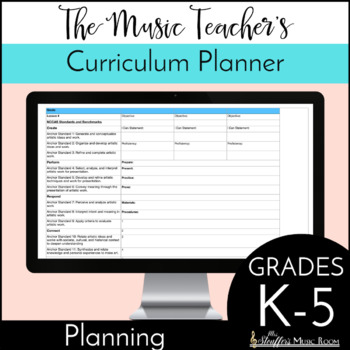
Need help lesson planning? This set has all the documents you need!
I hope this has given you some ideas!




Thank you so much, for helpfull ideas about planning. It was very interesting read and think about my lessons planning.