When you come across music ed resources, there are some things you might not have encountered before. They aren’t things that really are brought up in elementary methods courses, but they are simple ways to notate, isolate, mark, etc that appear in elementary music resources.
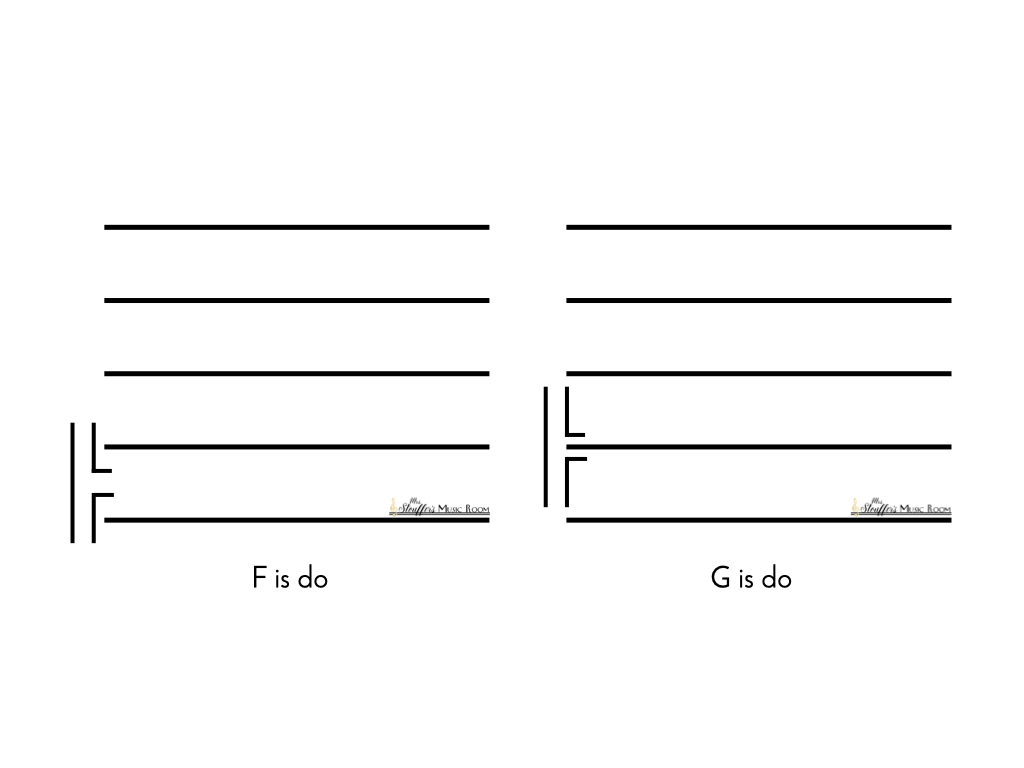
This is sort of a pseudo-clef that helps students know where do is before treble and bass clef have been introduced.
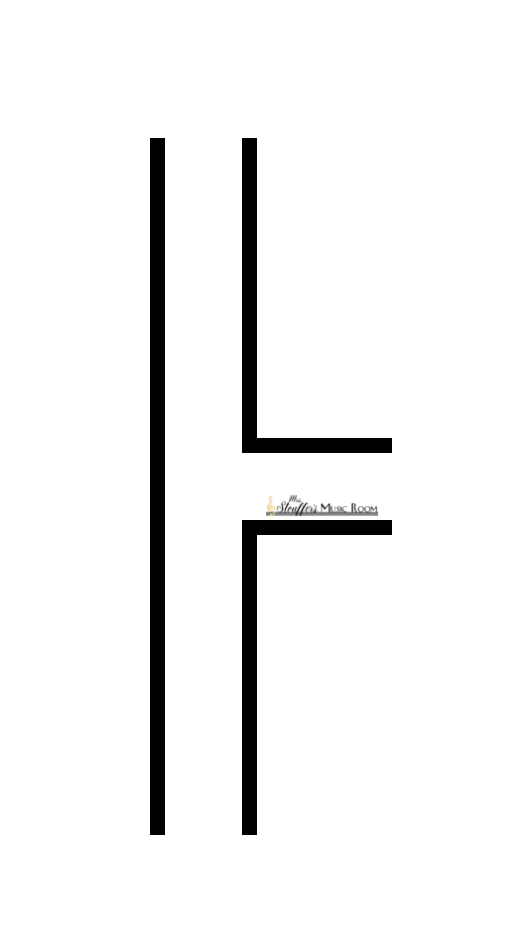
It’s easy enough to draw, even for students. The two horizontal lines point to a line or a space to show where do is. This is often used from the presentation of do until treble clef is introduced as well as accidentals and key signatures. I like it because it’s easy, takes out the guesswork for students, and your young students who may be struggling get something pointing to the line or space rather than trying to remember or having to count lines and spaces.
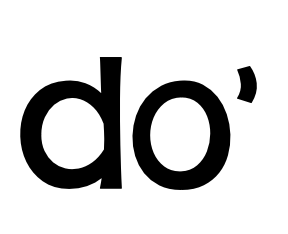
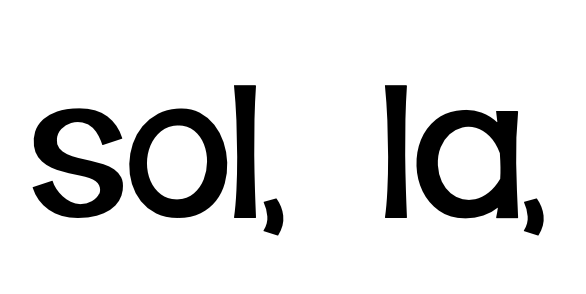
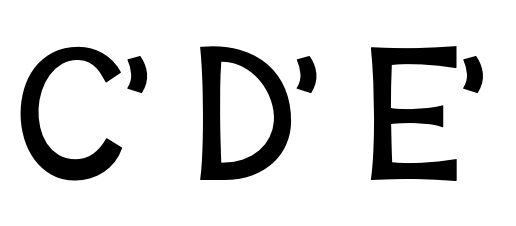
Sometimes you’ll see solfege or note names with an apostrophe or comma after them. This is a simple way to indicate if a note is above or below the scale.
For example:
High Do
Low La and Low Sol
High C, D, and E
You’ll run across Orff arrangements and unless you are familiar with it, it may take hours a moment to figure out what the letters meant. I was definitely that person when I was first teaching. Here’s a run down of the letters.
S, A, B – These are just like voice parts (soprano, alto, bass)
G, M, X – These represent the instruments (glockenspiel, alto, metallophone)
So they will look like this:
You may run into other ones as well, and you will see other abbreviations for unpitched percussion instruments but the Orff ones were the ones that had me guessing.
This one appears in lots of places and let’s chat about it. When it’s a piece without solfege like a chant, it makes sense, but why do you see it in folk song notation? I like using it because it isolates rhythm when I am focusing on rhythm with students, especially younger students. Yes, they do see real notation and I use it with all ages because they need to see it, but here’s the few benefits:
When I get to half note, they have to write real notation more often but I will have them bust it out when we have lots of sixteenth notes!
The one thing here I want to make mention of is that it’s important students still write regular notation. This is sort of like a short hand and has a place similarly to do clef. I like using both but it’s important students are exposed to the “real” notation as well. That being said, there are other notation systems outside of Western classical and those are just as real as do clef, stick notation, and the way Mozart wrote it.
I hope this has given you a helpful look at some of the notation norms you’ll see in elementary music resources!