
Dancing Hands could make you picture different things. A fingerplay. A blacklight hand dance. A person playing an instrument. A person signing to a friend. There are two books with the title Dancing Hands and I thought it would be fun to show how they can both be used in the music classroom as a pair.
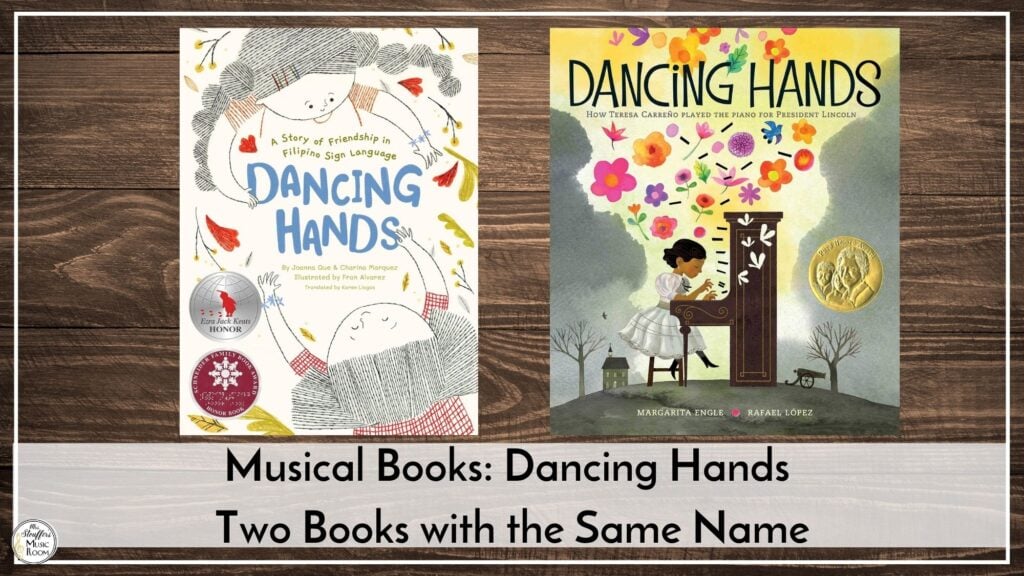
Author: Margarita Engle
Illustrator: Rafael López
ISBN: 978-1481487405
Buy the book on Amazon
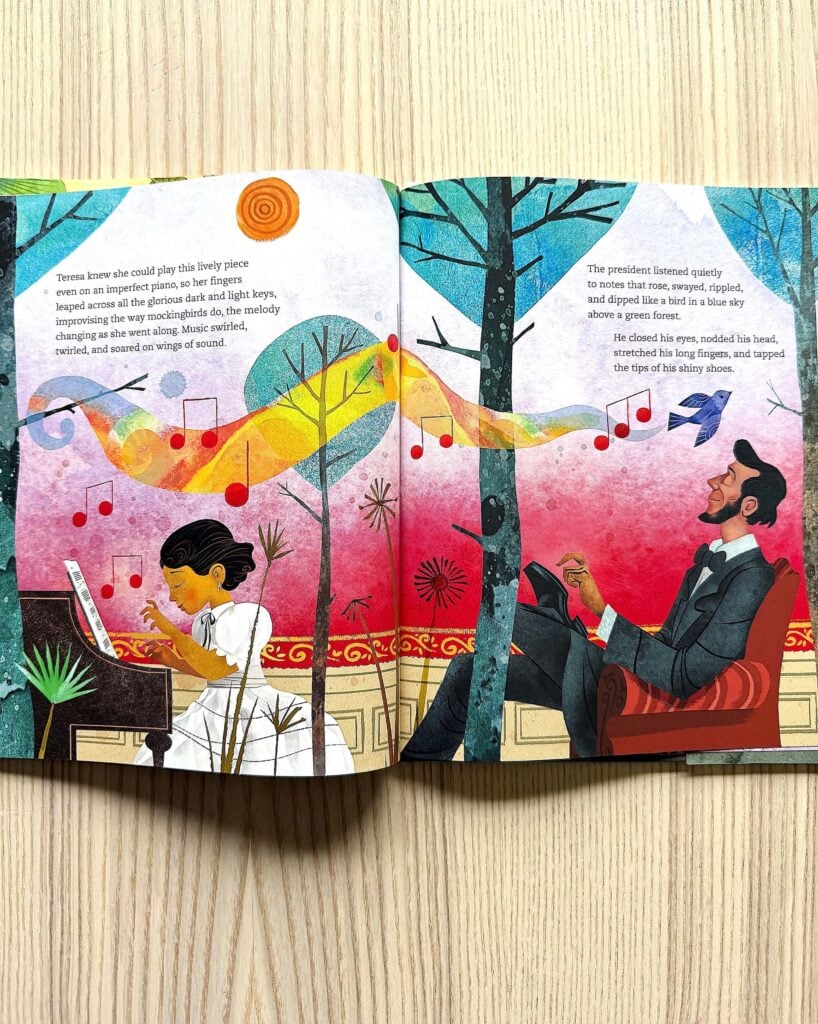
Dancing Hands is about Teresa Carreño. This book follows her from Venezuela learning the piano, writing her own music, and leaving Venezuela for the United States leaving one place with war to another. The story follows her to being invited to play for Abraham Lincoln.
Author: Joanna Que, Charina Marquez
Illustrator: Fran Alvarez
ISBN: 978-1797213323
Buy the book on Amazon
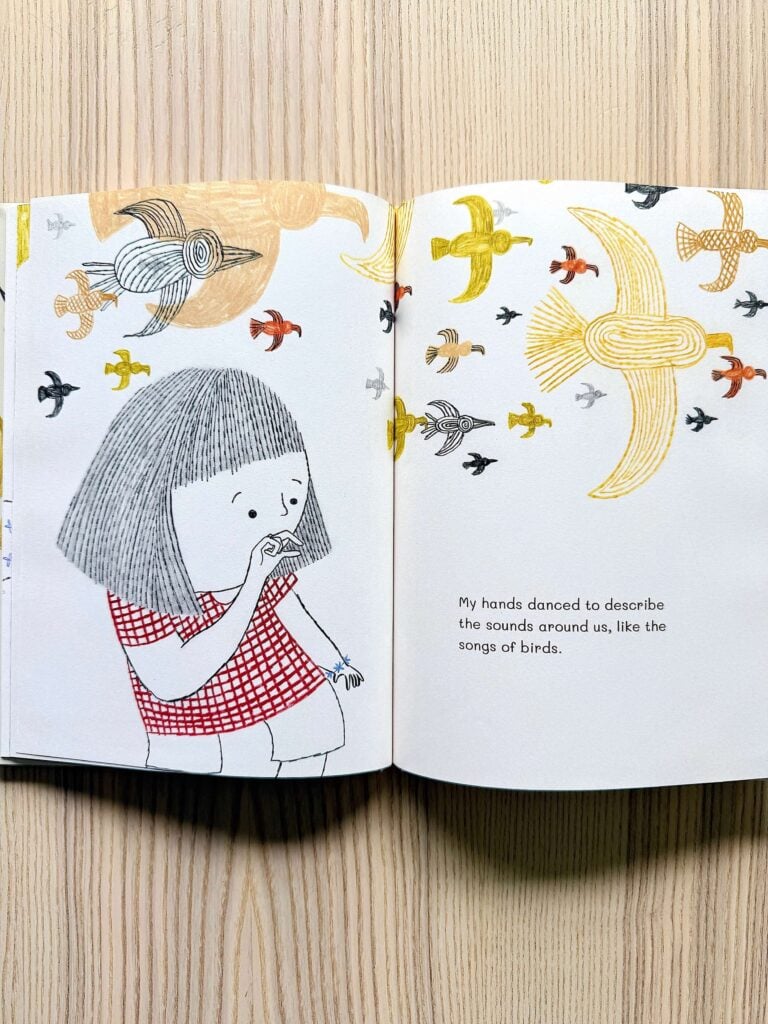
This book is outwardly, not musical. This is about Sam and Mai. The girls are neighbors who cannot communicate because Mai uses Filipino sign language. The book talks about communication difficulties, learning sign language from Mai, and becoming best friends. There are several pages that do not have words.
However, this book is a wonderful way to connect Filipino culture and American culture, discuss how characters in both books faced challenges, what they did to over come them and how trying new things led to exciting things.
I hope this gave you a bunch of ideas!
2 Responses
Fantastic ideas! I was familiar with the Careno book but not the Filipino story. How fun to compare and contrast like this!
Thank you! <3