Earn 71.20 Reward Points$89.00 Original price was: $89.00.$71.20Current price is: $71.20.
If you are over constant assessments but little retention, squeaking on the low end, overblowing, and kids saying they “don’t know how it goes”, then this is for you!
900+ pages – Zip,PDF
If you are over constant assessments but little retention, squeaking on the low end, overblowing, and kids saying they “don’t know how it goes”, then this is for you! This recorder method will not only eliminate some of the biggest issues in recorder teaching, but it will incorporate the knowledge your kids already have. Don’t start at the beginning. Start with what they KNOW. Using solfege and rhythm syllables, your kids will apply their knowledge to reading music faster. Teaching letters first is completely abstract. They aren’t ‘alphabetical’ — do we really ever go BAG in real life? No! So when you try to learn a fingering and with a letter that isn’t in order, that can be very frustrating! Teach by previous knowledge and add the note name after the fingering is comfortable!
Check out the sample pack of the Kodály-Aspiring Recorder
****Read more about the curriculum here: Kodaly Recorder Blog Post
See a full preview of the method book and student book here: Kodály-Aspiring Recorder Method.
REVIEWS ARE IN! The Kodaly-Aspiring Recorder is just what you need to get out of the recorder blues! “LOVE this resource!! I used it last year with my beginning recorder students and they easily picked up on reading and playing music.” “I am so excited to start using this resource with my fourth graders this year! I think this method will fit my teaching style much better than Recorder Karate was, and I love that there are so many songs to practice each concept!” “I’ve been looking for something to push the students further than Recorder Karate!! Thank you!”
How this recorder method works: It seems like there is always one. There is that one student that can’t play the recorder pieces because they can’t hear how it is ‘supposed to sound’. They are frustrated, and you are frustrated with them. This method uses what they already know: solfege and rhythm syllables. Focusing on the introduction of the fingering instead of the note name helps students understand by using a known concept instead of the idea of note names which can be very abstract for some kids. This system lends itself well to a ‘belt’ system too if you wish. Each belt would be at the completion of a concept/set of concepts. Some concepts are grouped together, others appear separate. The rhythmic concepts are not emphasized in this system, however, the first few are introduced with the solfege to review. Some rhythmic elements are not introduced in sequence to ensure that folk songs deal with only the solfege elements that have been introduced already. All solfege elements are practiced with 5 songs, rhythmic elements do not always have 5. Before students play each song, make sure they have been introduced to every concept in the song. I’ve included other musical elements such as repeats, anacrusis, ties, rounds, and time signature changes. Many of these do not happen until the later concepts when the children are more comfortable with the mechanics. In addition to being relatable concepts, this system also relies on widely known folk songs. This is also to help those kids that just need to hear it to play it as a beginner. Students can still practice at home once they have sung the songs in class but this must occur before they bring it home to practice. This method doesn’t deal with moveable do, or key signatures so that students can truly relate the solfege they know to the notes they are playing. Due to Do being fixed at C, low la and low sol do not appear but will be introduced in level 2 of the series when key changes and chromatics are introduced. If you’ve prepped them that do moves with other activities, it won’t be an issue later on if you don’t get to level 2. Also, if you work in a district that utilizes fixed-do in upper choral classes, they’ll have an advantage! Fingering charts do not include the letter names, but rather, a line for kids to write it in once they have learned it.
Includes:
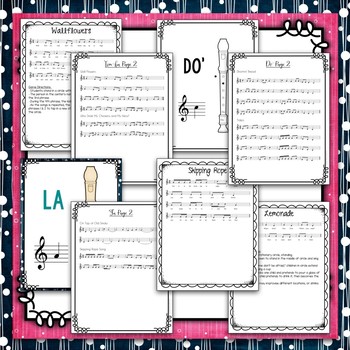
Kodály-Aspiring Recorder Method *Regular $20 for: Teacher Manual Student Book Classroom Posters for recorder fingerings with solfege. (3 print options with and without letter names) See them here: Solfege Recorder Fingering Posters
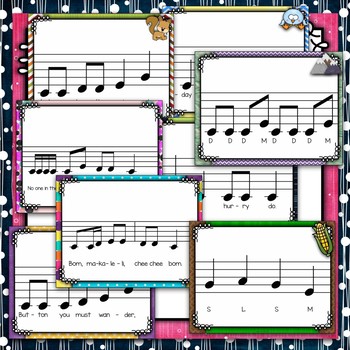
The Kodaly-Aspiring Recorder Practice Sets 3 options: With words, with solfege, “You can do it” with notes only
{Sol/Mi} {Ta/TiTi} Practice Set *Regular $3
{La} {Ta Rest} Practice Set *Regular $3
{Do} {Half Note} Practice Set *Regular $3
{Re} Practice Set *Regular $3
{Tika Tika} {Ti Rest} {TiTika} {TikaTi} Practice Set *Regular $3
{High Do} Practice Set *Regular $3
{Syncopa} Practice Set *Regular $3
{Tam Ti/Ti Tam} Practice Set *Regular $3
{Ti – Solfege} Practice Set *Regular $3
{Tim-ka} Practice Set *Regular $3
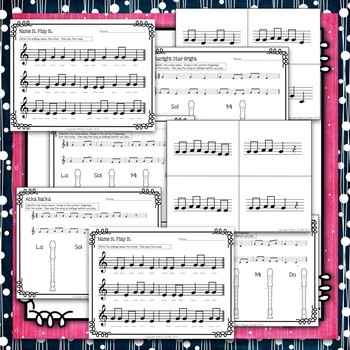
The Kodaly-Aspiring Recorder Worksheet Worksheets and activities for each set of concepts! Perfect for assessments! Worksheets for 5 in each set Task Cards with patterns for each song and ideas for use. Name it sheets (with and without letter name directions) Solfege recognition page on staff Compose it!
{Sol/Mi} {Ta/TiTi} Worksheets *Regular $3
{La} {Ta Rest} Worksheets *Regular $3
{Do} {Half Note} Worksheets *Regular $3
{Re} Worksheets *Regular $3
{Tika Tika} {Ti Rest} {TiTika} {TikaTi} Worksheets *Regular $3
{High Do} Worksheets *Regular $3
{Fa} Worksheets *Regular $3
{Syncopa} Worksheets *Regular $3
{Tam Ti/Ti Tam} Worksheets *Regular $3
{Ti} Worksheets *Regular $3
{Tim-ka} Worksheets *Regular $3
Kodaly Concepts Covered in the following order:
Sol/Mi & Ta/Ti-Ti (So/Mi option included)
La & Ta Rest
Do & Half Note
Re
Tika-Tika Ti Rest & Ti-Tika Tika-Ti
Ti (Single Eighth Note)
High Do
Fa
Syncopa
Tam Ti Ti
Tam Ti – Solfege
Tim-ka
Resources for the Kodály-Aspiring Recorder Method All Kodaly-Aspiring Recorder Files
Love the Kodaly recorder? Check out my Folk Song Files for the Kodály Classroom
I've created a simple point system for giving back to loyal customers!
This means that you effectively get 5% back on everything you buy, plus extra points for feedback. Points are valid for one year and can be used for anything in the store!
Note: Point award system is subject to change. View full terms here.
Only logged in customers who have purchased this product may leave a review.
There are two ways to get to your purchased downloads:
No! This item contains files that will be downloaded to your computer. You may print them at home/work/school or send to a professional printer.
Please visit my store FAQ to get more information about pricing, shipping, and more!
Due to current tax laws, sales tax is only charged to physical shipped goods for those in the state of Michigan, United States. If you are with a school and have a tax exempt form, please contact me so I may adjust your tax rate.
International customers are responsible for all customs/duties charged by their applicable country.
Note: this is subject to change at any time to comply with local, national, and international tax laws.
Searches products and blog posts.
Take 2 seconds and let us send you FREE resources! See you soon!

Emily S. –
I can’t wait to really delve into this! I use a few different methods for teaching recorder, and am so excited about this one, since it will match up with my teaching style!
Katia Escalera –
Cant’ wait to start this with my 3rd and 4th graders. Thanks for your creativity.
Pamella B. –
Thank you so much for putting this together! I just started using solfege to teach recorder and now all of the work is done for me. Awesome job!
Rhonda B. –
This is awesome! Just having new ways to play some games – and new songs and games – and GRAPHICS galore to go with – is more than worth the price. I can’t wait to re-visit old favorites from K-4th with my 5th graders this year with this set. Thank you *so* much!!!
Also, a huge thank you for helping me get the files downloaded during your summer break!
My Music Market –
I am so so so so so so so so soooooooooo excited to use this in my class this year. I’m going into year 2 and my biggest regret from this past year was using Recorder Karate. For the same reasons you mentioned in your blog posts, I didn’t have much luck. After a full YEAR, only a small handful of my students achieved the orange belt! I am so excited to use this resource because I truly believe that this product is what I’ve been missing this whole time! This product truly emphasizes learning concepts, and it continuously builds on previously learned concepts! There are certainly ways that you can include incentives in this program on your own, but I love that it’s not required.
Thank you so much for this resource. I truly believe that this resource will bring results to my classroom, and after this year I am excited to see my recorder students grow!!!!
Shiver Me Timbres –
Awesome
Emeline O. –
great complement to my ressources
Christina K. –
Great resource!
Katie Quagliotto –
Excited to use this method with my 4th graders this year. I love how it connects to solfege that we are already using in class in K-3, and helps bridge the gap to note reading, while also including games along with the songs, so I can let them be kids while they learn.
Elizabeth Klauzer –
Enjoying using this resources so far. I wish it maybe had some lesson plans to go with it. Maybe I missed something. Overall very happy with it. My recorders playing well. Thank you!
Laughter in the Music Room –
This is a great resource and very thorough!
Ariana D. –
So excited to use the songs we had learned on solfege to reinforce notes on the recorder!
Kelley Fewer –
Our province has an authorized recorder curriculum, but this resource provides lots of different ways to present beginning recorder concepts.
Hayley M. –
Thank you!
Catalyst Productions & School Tech –
Great to segue from Kodaly-based (voice + percussion) curriculum in earlier years, to using this with Year 2+
Megan P. –
Fantastic! Thanks so much.
Music Down by The Bay –
Thorough and understandable. Thank you!
Jessica W. –
Makes so much sense! Goes great with the Kodaly methodology!
Andrea G. –
Kodaly Recorder is a great idea. I don’t think my Kodaly program is strong enough yet for this to work as well as I want it to with my kids, but we are moving that direction. The resource is excellent.
Lacey Easterday –
This is a fantastic set! I am so excited to use it.
Katie H. –
Love this!
Jackolyn I. –
This is a great resource for teachers who would like to incorporate the recorder in a Kodaly-inspired classroom.
Lynda K. –
I am excited to use this–thanks!
The NicNat Shack –
Great product; thank you!
Mary F. –
Just what I was looking for!
mary crum –
I am so happy that people are putting together a collection of recorder material. This is so inclusive and wonderfully put together. It will last through the year and beyond, it is better than any store bought book. I was attracted to this product because it was Koday based and I am not disappointed. The transition from singing to playing was smooth and easy.
Victoria M. –
This is exactly what my students needed this year! I am at a new school and I have older students working on concepts usually presented in younger grades. Having the curriculum go along with the Kodály sequence has been amazing for them, because they are learning new notes and rhythms, and they can be directly applied to our instruments!
Shelley –
LOVE that you love it! I found the same thing when I first started using it with my kids. It caught some of them up on stuff I wasn’t around for when they were younger.
Music with Miss P –
LOVE THIS! This is exactly what I needed, thank you!
Christine S. –
Interesting idea to have a Kodaly-aligned approach to teaching recorders!
I found the file organization rather overwhelming and would have liked more clarity there. Still, I understand it was a major project to prepare this and appreciate all the hard work that went into it.
Although it meshes very well with the Kodaly sequence of concepts, I’m not entirely convinced it’s a more effective way to teach recorder-playing, as opposed to singing, since difficult recorder notes like low Do and Ré are taught before simple ones like Ti/Si! So I’m following the first part of the sequence and adapting the rest according to what I think will work best for my Grade 3 & 4 students. But I’m really pleased to have a large part of it ready to go, including tests!
Marilee S. –
My students loved this!
Leanne J. –
This was the recorder resource I was looking for! Having recently completed my Kodaly Level 1 training, I wanted something that was more in-line with my new planning structure. This resource is well sequenced, lends itself to singing first, and is absolutely pretty!
Christina Placke –
I love the flow of concepts in this recorder method. I started this in class at the end of last year and am now continuing it online. My students seem to really like these songs and the activities that go along with them.
Elaine C. –
Just got started before schools shut down but plan on using this again in the future!
Anna M. –
Outstanding resource. More than I could use in a year… it’s been a well designed process for learning recorder.
Mary R. –
My recorder students enjoyed this.
Melanie’s Kodaly Classroom –
Fantastic Kodaly-sequenced recorder method.
Catherine Dunafin –
I really like how this aligned to songs that students had already worked on in class. It was a more seamless transition to the recorder.
Morgan L. –
I was very hesitant to take the plunge into starting with G-E on recorder instead of the standard BAG. I don’t regret it for a second. My students connected recorder to previous learning so much better than they have in other years, and though there was more struggle up front, there was significantly less squeaking and struggles with the right hand, and we ended up progressing much more quickly. The students also really enjoyed reviewing the games that we learned when they were younger, then learning to play them on the recorder. I did supplement with some more folk music from other countries to better reflect my student population.
Music And Art With Heart –
This is an INCREDIBLE recorder resource, worth every penny!! If you teach Kodaly and recorder, you need this! There is more than I could possibly teach in my recorder units but I so appreciate the layout of the resources, the many many songs for each concept (most of which my kids learned in previous years which is ideal!), and all the options offered for printing music/fingering posters, etc. This has saved me so much precious time I don’t have!! Thank you!!
theartsione –
This resource is amazing. Thank you so much for putting so much effort into making it so helpful!